
Surgeons have successfully transplanted a larynx for the second time in history, giving a fifty-two year old Californian back her voice. Brenda Jenson was operated on for eighteen hours at the University of California, Davis Medical Center, and was able to form her first words after nearly two weeks. She spent four weeks in the hospital following the surgery, and while her speech was very weak at first, it improved rapidly. After weeks of rehabilitation, Jenson met the whole surgical team for the first time.
Jensen expressed her gratitude and said “This operation has restored my life. I feel so blessed to have been given this opportunity. It is a miracle, I’m talking, talking, talking which just amazes my friends and family. Every day is a new beginning for me. I’m working so hard to use my vocal cords and train my muscles to swallow… I’ll probably never sing in a choir or anything, but it’s exciting to talk normally and I can’t wait to eat and drink and swim again.”
Generally, the risks of rejection and nerve damage to the larynx prevent doctors from attempting this transplant. In fact, the only other such transplant recorded took place in 1998. Jensen was an unusually fitting candidate for the surgery, though, as she had recently undergone both kidney and pancreas transplants, and was already used to the immunosuppressive medications required following a transplant.
Professor Martin Birchall, who was part of the surgical team, said “The larynx is one of the most sophisticated neuromuscular organs in the body. We’ve learned that we can repair nerves to make even very complex organs function again. It’ll open the door to better facial transplants and will be extremely important as tissue engineering develops.”
 Numerous researchers have reached the same conclusion: O blood type might protect the body from heart attacks once arteries are clogged.
 A study whose results were released last Friday shows that a certain class of drugs known as “atypical antipsychotics” are being over prescribed with no increased positive outcomes and with perhaps bad side effects.
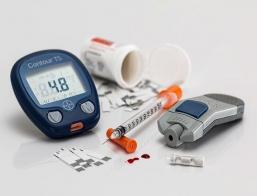 According to a government report issued last Wednesday, the number or cases of diabetes among adults in the United States more than doubled in the time period between 1996 and 2007, from 9 million to 19 million.